1
2
3
4
5
6
7
8
9
10
11
12
13
14
15
16
17
18
19
20
21
22
23
24
25
26
27
28
29
30
31
32
33
34
35
36
37
38
39
40
41
42
43
44
45
46
47
48
49
50
51
52
53
54
55
56
57
58
59
60
61
62
63
64
65
66
67
68
69
70
71
72
73
74
75
76
77
78
79
80
81
82
83
84
85
86
87
88
89
90
91
92
93
94
95
96
97
98
99
100
101
102
103
104
105
106
107
| golangci-lint help linters
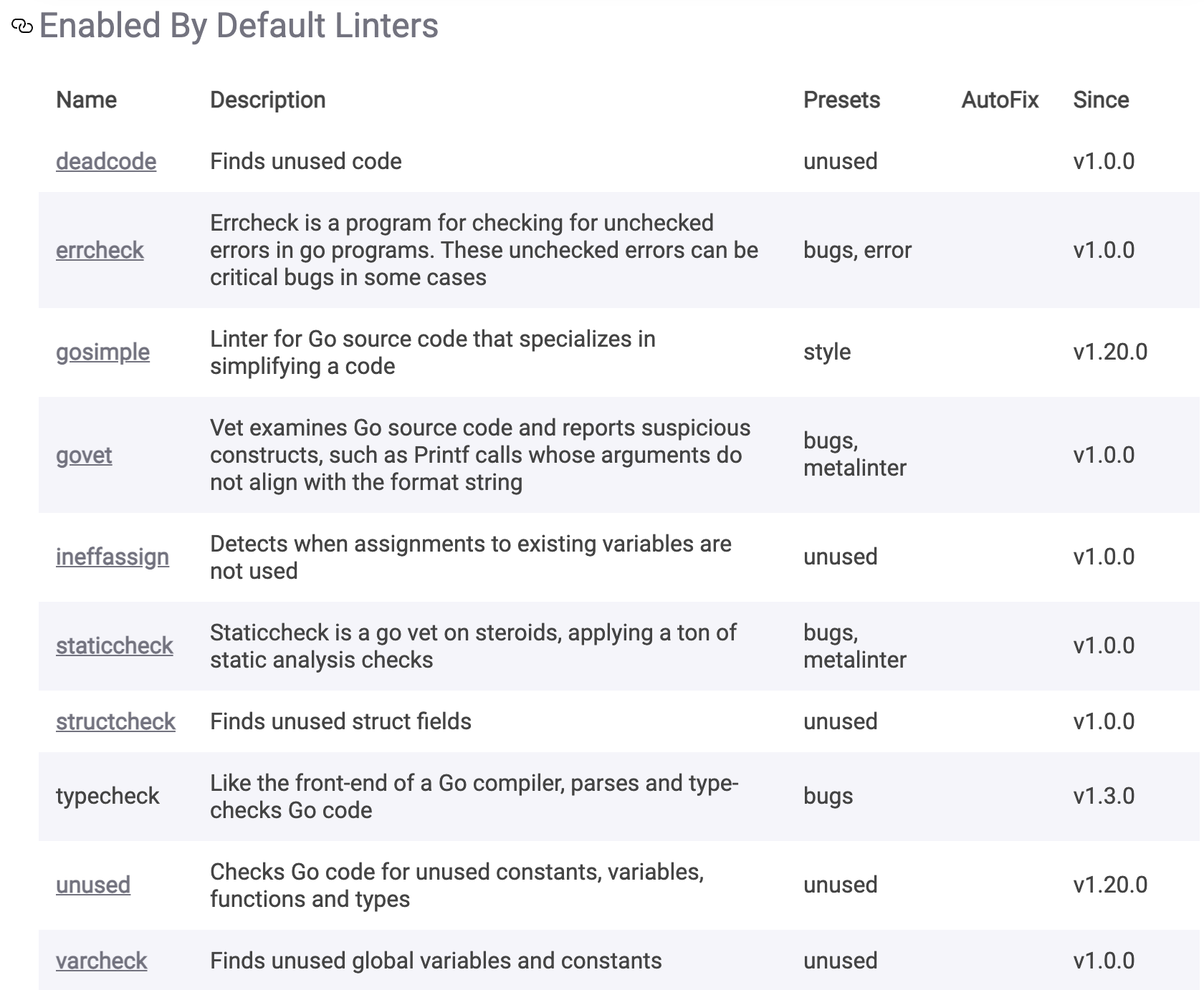
Enabled by default linters:(默认生效的 linters)
deadcode: Finds unused code [fast: false, auto-fix: false]
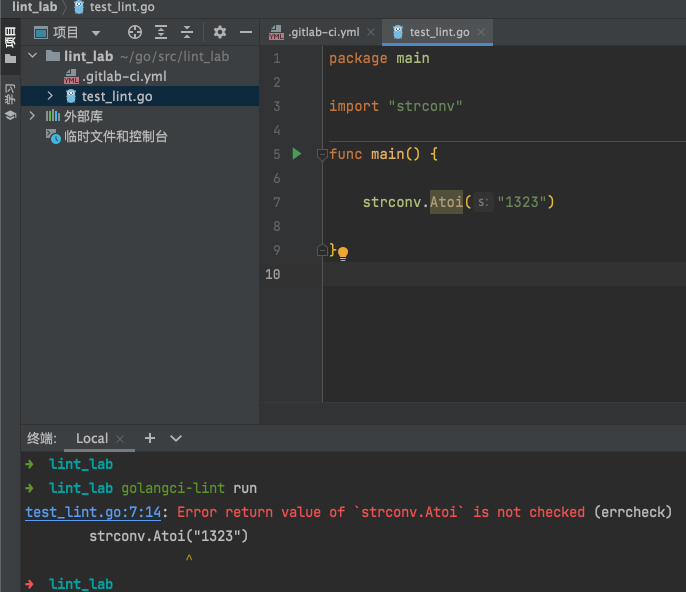
errcheck: Errcheck is a program for checking for unchecked errors in go programs. These unchecked errors can be critical bugs in some cases [fast: false, auto-fix: false]
gosimple (megacheck): Linter for Go source code that specializes in simplifying a code [fast: false, auto-fix: false]
govet (vet, vetshadow): Vet examines Go source code and reports suspicious constructs, such as Printf calls whose arguments do not align with the format string [fast: false, auto-fix: false]
ineffassign: Detects when assignments to existing variables are not used [fast: true, auto-fix: false]
staticcheck (megacheck): Staticcheck is a go vet on steroids, applying a ton of static analysis checks [fast: false, auto-fix: false]
structcheck: Finds unused struct fields [fast: false, auto-fix: false]
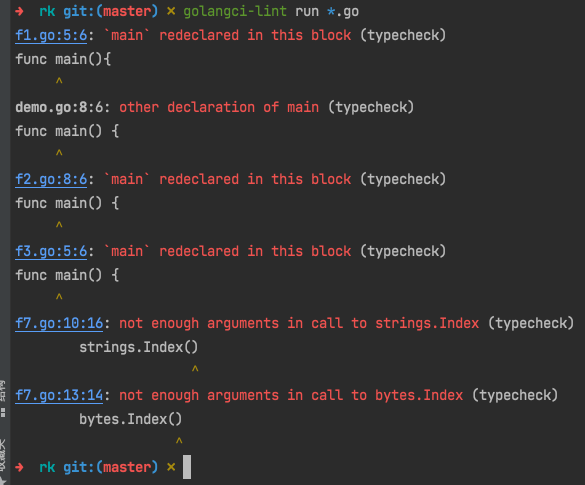
typecheck: Like the front-end of a Go compiler, parses and type-checks Go code [fast: false, auto-fix: false]
unused (megacheck): Checks Go code for unused constants, variables, functions and types [fast: false, auto-fix: false]
varcheck: Finds unused global variables and constants [fast: false, auto-fix: false]
Disabled by default linters:(默认不生效的 linters)
asciicheck: Simple linter to check that your code does not contain non-ASCII identifiers [fast: true, auto-fix: false]
bidichk: Checks for dangerous unicode character sequences [fast: true, auto-fix: false]
bodyclose: checks whether HTTP response body is closed successfully [fast: false, auto-fix: false]
contextcheck: check the function whether use a non-inherited context [fast: false, auto-fix: false]
cyclop: checks function and package cyclomatic complexity [fast: false, auto-fix: false]
depguard: Go linter that checks if package imports are in a list of acceptable packages [fast: false, auto-fix: false]
dogsled: Checks assignments with too many blank identifiers (e.g. x, _, _, _, := f()) [fast: true, auto-fix: false]
dupl: Tool for code clone detection [fast: true, auto-fix: false]
durationcheck: check for two durations multiplied together [fast: false, auto-fix: false]
errname: Checks that sentinel errors are prefixed with the `Err` and error types are suffixed with the `Error`. [fast: false, auto-fix: false]
errorlint: errorlint is a linter for that can be used to find code that will cause problems with the error wrapping scheme introduced in Go 1.13. [fast: false, auto-fix: false]
exhaustive: check exhaustiveness of enum switch statements [fast: false, auto-fix: false]
exhaustivestruct: Checks if all struct's fields are initialized [fast: false, auto-fix: false]
exportloopref: checks for pointers to enclosing loop variables [fast: false, auto-fix: false]
forbidigo: Forbids identifiers [fast: true, auto-fix: false]
forcetypeassert: finds forced type assertions [fast: true, auto-fix: false]
funlen: Tool for detection of long functions [fast: true, auto-fix: false]
gci: Gci control golang package import order and make it always deterministic. [fast: true, auto-fix: true]
gochecknoglobals: check that no global variables exist [fast: true, auto-fix: false]
gochecknoinits: Checks that no init functions are present in Go code [fast: true, auto-fix: false]
gocognit: Computes and checks the cognitive complexity of functions [fast: true, auto-fix: false]
goconst: Finds repeated strings that could be replaced by a constant [fast: true, auto-fix: false]
gocritic: Provides diagnostics that check for bugs, performance and style issues. [fast: false, auto-fix: false]
gocyclo: Computes and checks the cyclomatic complexity of functions [fast: true, auto-fix: false]
godot: Check if comments end in a period [fast: true, auto-fix: true]
godox: Tool for detection of FIXME, TODO and other comment keywords [fast: true, auto-fix: false]
goerr113: Golang linter to check the errors handling expressions [fast: false, auto-fix: false]
gofmt: Gofmt checks whether code was gofmt-ed. By default this tool runs with -s option to check for code simplification [fast: true, auto-fix: true]
gofumpt: Gofumpt checks whether code was gofumpt-ed. [fast: true, auto-fix: true]
goheader: Checks is file header matches to pattern [fast: true, auto-fix: false]
goimports: In addition to fixing imports, goimports also formats your code in the same style as gofmt. [fast: true, auto-fix: true]
golint: Golint differs from gofmt. Gofmt reformats Go source code, whereas golint prints out style mistakes [fast: false, auto-fix: false]
gomnd: An analyzer to detect magic numbers. [fast: true, auto-fix: false]
gomoddirectives: Manage the use of 'replace', 'retract', and 'excludes' directives in go.mod. [fast: true, auto-fix: false]
gomodguard: Allow and block list linter for direct Go module dependencies. This is different from depguard where there are different block types for example version constraints and module recommendations. [fast: true, auto-fix: false]
goprintffuncname: Checks that printf-like functions are named with `f` at the end [fast: true, auto-fix: false]
gosec (gas): Inspects source code for security problems [fast: false, auto-fix: false]
ifshort: Checks that your code uses short syntax for if-statements whenever possible [fast: true, auto-fix: false]
importas: Enforces consistent import aliases [fast: false, auto-fix: false]
interfacer: Linter that suggests narrower interface types [fast: false, auto-fix: false]
ireturn: Accept Interfaces, Return Concrete Types [fast: false, auto-fix: false]
lll: Reports long lines [fast: true, auto-fix: false]
makezero: Finds slice declarations with non-zero initial length [fast: false, auto-fix: false]
maligned: Tool to detect Go structs that would take less memory if their fields were sorted [fast: false, auto-fix: false]
misspell: Finds commonly misspelled English words in comments [fast: true, auto-fix: true]
nakedret: Finds naked returns in functions greater than a specified function length [fast: true, auto-fix: false]
nestif: Reports deeply nested if statements [fast: true, auto-fix: false]
nilerr: Finds the code that returns nil even if it checks that the error is not nil. [fast: false, auto-fix: false]
nilnil: Checks that there is no simultaneous return of `nil` error and an invalid value. [fast: false, auto-fix: false]
nlreturn: nlreturn checks for a new line before return and branch statements to increase code clarity [fast: true, auto-fix: false]
noctx: noctx finds sending http request without context.Context [fast: false, auto-fix: false]
nolintlint: Reports ill-formed or insufficient nolint directives [fast: true, auto-fix: false]
paralleltest: paralleltest detects missing usage of t.Parallel() method in your Go test [fast: true, auto-fix: false]
prealloc: Finds slice declarations that could potentially be preallocated [fast: true, auto-fix: false]
predeclared: find code that shadows one of Go's predeclared identifiers [fast: true, auto-fix: false]
promlinter: Check Prometheus metrics naming via promlint [fast: true, auto-fix: false]
revive: Fast, configurable, extensible, flexible, and beautiful linter for Go. Drop-in replacement of golint. [fast: false, auto-fix: false]
rowserrcheck: checks whether Err of rows is checked successfully [fast: false, auto-fix: false]
scopelint: Scopelint checks for unpinned variables in go programs [fast: true, auto-fix: false]
sqlclosecheck: Checks that sql.Rows and sql.Stmt are closed. [fast: false, auto-fix: false]
stylecheck: Stylecheck is a replacement for golint [fast: false, auto-fix: false]
tagliatelle: Checks the struct tags. [fast: true, auto-fix: false]
tenv: tenv is analyzer that detects using os.Setenv instead of t.Setenv since Go1.17 [fast: false, auto-fix: false]
testpackage: linter that makes you use a separate _test package [fast: true, auto-fix: false]
thelper: thelper detects golang test helpers without t.Helper() call and checks the consistency of test helpers [fast: false, auto-fix: false]
tparallel: tparallel detects inappropriate usage of t.Parallel() method in your Go test codes [fast: false, auto-fix: false]
unconvert: Remove unnecessary type conversions [fast: false, auto-fix: false]
unparam: Reports unused function parameters [fast: false, auto-fix: false]
varnamelen: checks that the length of a variable's name matches its scope [fast: false, auto-fix: false]
wastedassign: wastedassign finds wasted assignment statements. [fast: false, auto-fix: false]
whitespace: Tool for detection of leading and trailing whitespace [fast: true, auto-fix: true]
wrapcheck: Checks that errors returned from external packages are wrapped [fast: false, auto-fix: false]
wsl: Whitespace Linter - Forces you to use empty lines! [fast: true, auto-fix: false]
Linters presets:(linters 分类)
bugs: asciicheck, bidichk, bodyclose, contextcheck, durationcheck, errcheck, errorlint, exhaustive, exportloopref, gosec, govet, makezero, nilerr, noctx, rowserrcheck, scopelint, sqlclosecheck, staticcheck, typecheck
comment: godot, godox, misspell
complexity: cyclop, funlen, gocognit, gocyclo, nestif
error: errcheck, errorlint, goerr113, wrapcheck
format: gci, gofmt, gofumpt, goimports
import: depguard, gci, goimports, gomodguard
metalinter: gocritic, govet, revive, staticcheck
module: depguard, gomoddirectives, gomodguard
performance: bodyclose, maligned, noctx, prealloc
sql: rowserrcheck, sqlclosecheck
style: asciicheck, depguard, dogsled, dupl, errname, exhaustivestruct, forbidigo, forcetypeassert, gochecknoglobals, gochecknoinits, goconst, gocritic, godot, godox, goerr113, goheader, golint, gomnd, gomoddirectives, gomodguard, goprintffuncname, gosimple, ifshort, importas, interfacer, ireturn, lll, makezero, misspell, nakedret, nilnil, nlreturn, nolintlint, paralleltest, predeclared, promlinter, revive, stylecheck, tagliatelle, tenv, testpackage, thelper, tparallel, unconvert, varnamelen, wastedassign, whitespace, wrapcheck, wsl
test: exhaustivestruct, paralleltest, testpackage, tparallel
unused: deadcode, ineffassign, structcheck, unparam, unused, varcheck
|