/* Copyright 2019 The Kubernetes Authors. Licensed under the Apache License, Version 2.0 (the "License"); you may not use this file except in compliance with the License. You may obtain a copy of the License at http://www.apache.org/licenses/LICENSE-2.0 Unless required by applicable law or agreed to in writing, software distributed under the License is distributed on an "AS IS" BASIS, WITHOUT WARRANTIES OR CONDITIONS OF ANY KIND, either express or implied. See the License for the specific language governing permissions and limitations under the License. */
// Package interrupts exposes helpers for graceful handling of interrupt signals package interrupts
// only one instance of the manager ever exists var single *manager
funcinit() { m := sync.Mutex{} single = &manager{ c: sync.NewCond(&m), wg: sync.WaitGroup{}, } go handleInterrupt() }
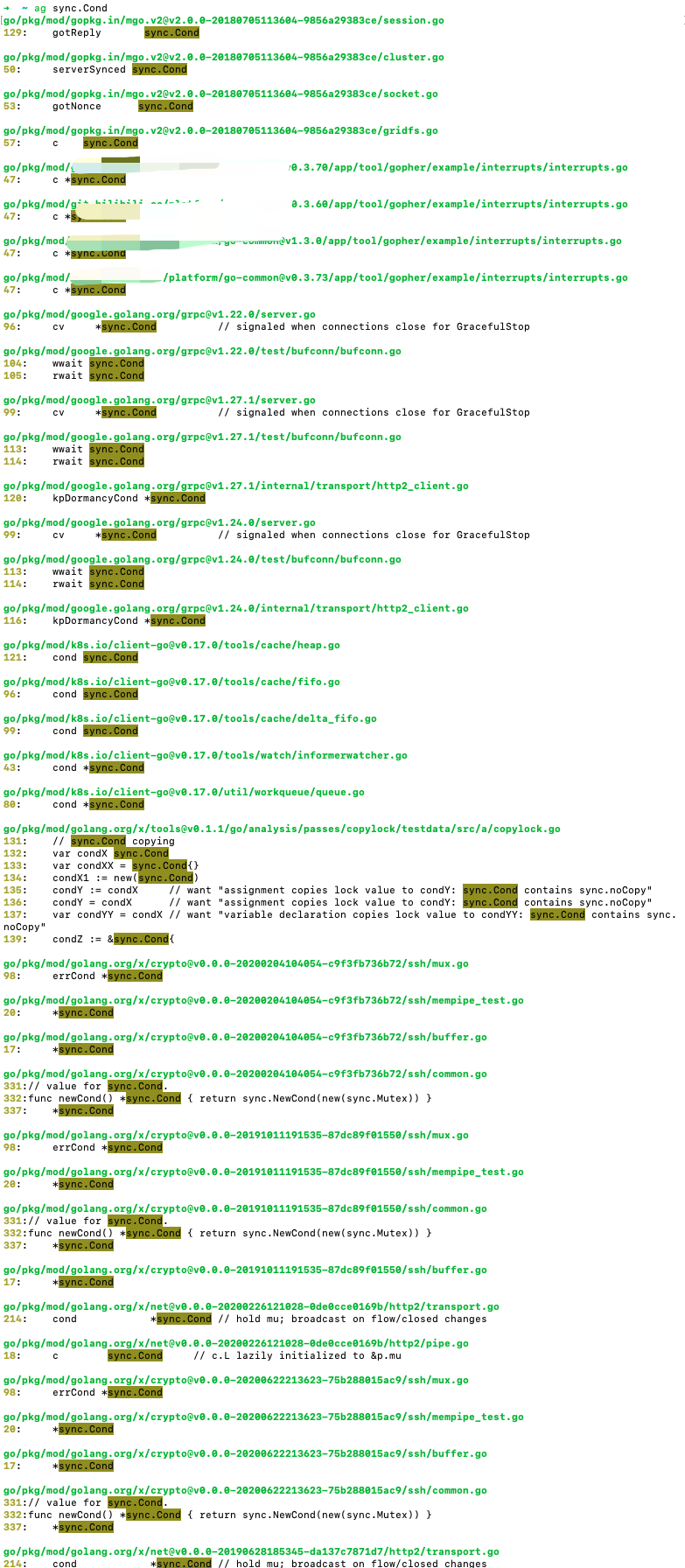
type manager struct { // only one signal handler should be installed, so we use a cond to // broadcast to workers that an interrupt has occurred c *sync.Cond // we record whether we've broadcast in the past seenSignal bool // we want to ensure that all registered servers and workers get a // change to gracefully shut down wg sync.WaitGroup }
// handleInterrupt turns an interrupt into a broadcast for our condition. // This must be called _first_ before any work is registered with the // manager, or there will be a deadlock. funchandleInterrupt() { signalsLock.Lock() sigChan := signals() signalsLock.Unlock() s := <-sigChan logrus.WithField("signal", s).Info("Received signal.") single.c.L.Lock() single.seenSignal = true single.c.Broadcast() single.c.L.Unlock() }
// test initialization will set the signals channel in another goroutine // so we need to synchronize that in order to not trigger the race detector // even though we know that init() calls will be serial and the test init() // will fire first var signalsLock = sync.Mutex{}
// signals allows for injection of mock signals in testing var signals = func() <-chan os.Signal { sig := make(chan os.Signal, 1) signal.Notify(sig, os.Interrupt, syscall.SIGTERM, syscall.SIGABRT) return sig }
// wait executes the cancel when an interrupt is seen or if one has already // been handled funcwait(cancel func()) { single.c.L.Lock() if !single.seenSignal { single.c.Wait() } single.c.L.Unlock() cancel() }
var gracePeriod = 1 * time.Minute
// WaitForGracefulShutdown waits until all registered servers and workers // have had time to gracefully shut down, or times out. This function is // blocking. funcWaitForGracefulShutdown() { wait(func() { logrus.Info("Interrupt received.") }) finished := make(chanstruct{}) gofunc() { single.wg.Wait() close(finished) }() select { case <-finished: logrus.Info("All workers gracefully terminated, exiting.") case <-time.After(gracePeriod): logrus.Warn("Timed out waiting for workers to gracefully terminate, exiting.") } }
// Context returns a context that stays is cancelled when an interrupt hits. // Using this context is a weak guarantee that your work will finish before // process exit as callers cannot signal that they are finished. Prefer to use // Run(). funcContext() context.Context { ctx, cancel := context.WithCancel(context.Background()) single.wg.Add(1) go wait(func() { cancel() single.wg.Done() })
return ctx }
// Run will do work until an interrupt is received, then signal the // worker. This function is not blocking. Callers are expected to exit // only after WaitForGracefulShutdown returns to ensure all workers have // had time to shut down. This is preferable to getting the raw Context // as we can ensure that the work is finished before releasing our share // of the wait group on shutdown. funcRun(work func(ctx context.Context)) { ctx, cancel := context.WithCancel(context.Background()) single.wg.Add(1) gofunc() { defer single.wg.Done() work(ctx) }()
go wait(cancel) }
// ListenAndServe runs the HTTP server and handles shutting it down // gracefully on interrupts. This function is not blocking. Callers // are expected to exit only after WaitForGracefulShutdown returns to // ensure all servers have had time to shut down. funcListenAndServe(server *http.Server, gracePeriod time.Duration) { single.wg.Add(1) gofunc() { defer single.wg.Done() logrus.WithError(server.ListenAndServe()).Info("Server exited.") }()
go wait(shutdown(server, gracePeriod)) }
// ListenAndServe runs the HTTP server and handles shutting it down // gracefully on interrupts. This function is not blocking. Callers // are expected to exit only after WaitForGracefulShutdown returns to // ensure all servers have had time to shut down. funcListenAndServeTLS(server *http.Server, certFile, keyFile string, gracePeriod time.Duration) { single.wg.Add(1) gofunc() { defer single.wg.Done() logrus.WithError(server.ListenAndServeTLS(certFile, keyFile)).Info("Server exited.") }()
go wait(shutdown(server, gracePeriod)) }
// shutdown will shut down the server funcshutdown(server *http.Server, gracePeriod time.Duration)func() { returnfunc() { logrus.Info("Server shutting down...") ctx, cancel := context.WithTimeout(context.Background(), gracePeriod) if err := server.Shutdown(ctx); err != nil { logrus.WithError(err).Info("Error shutting down server...") } cancel() } }
// Tick will do work on a dynamically determined interval until an // interrupt is received. This function is not blocking. Callers are // expected to exit only after WaitForGracefulShutdown returns to // ensure all workers have had time to shut down. funcTick(work func(), interval func() time.Duration) { before := time.Time{} // we want to do work right away sig := make(chanint, 1) single.wg.Add(1) gofunc() { defer single.wg.Done() for { nextInterval := interval() nextTick := before.Add(nextInterval) sleep := time.Until(nextTick) logrus.WithFields(logrus.Fields{ "before": before, "interval": nextInterval, "sleep": sleep, }).Debug("Resolved next tick interval.") select { case <-time.After(sleep): before = time.Now() work() case <-sig: logrus.Info("Worker shutting down...") return } } }()
// OnInterrupt ensures that work is done when an interrupt is fired // and that we wait for the work to be finished before we consider // the process cleaned up. This function is not blocking. funcOnInterrupt(work func()) { single.wg.Add(1) go wait(func() { work() single.wg.Done() }) }