Semaphore-带权重的信号量

初入门径


Java中有Semaphore,用来限制访问特定资源的并发线程的数量.相对于内置锁synchronized和重入锁ReentrantLock的互斥性来说,Semaphore可以允许多个线程同时访问共享资源

参考自 Go 并发编程-信号量的使用方法和其实现原理

信号量的概念由 Dijkstra 提出,广泛应用在不同的操作系统中。系统会给每一个进程一个信号量,代表每个进程当前的状态,未得到控制权的进程,会在特定的地方被迫停下来,等待可以继续进行的信号到来。

PV操作

一般用信号量来保护一组资源, 如数据库连接池、一组客户端的连接等等。每次获取资源时,都会将信号量中的计数器减去对应的数值,在释放资源时重新加回来。当遇到信号量资源不够时,尝试获取的线程就会进入休眠,等待其他线程释放归还信号量。如果信号量是只有0和1的二进位信号量,那么其 P/V 就和互斥锁的 Lock/Unlock 一样了。


Go 内部使用信号量来控制goroutine的阻塞和唤醒,如互斥锁sync.Mutex结构体的第二个字段,就是一个信号量:

1
2
3
4
type Mutex struct {
state int32
sema uint32
}

信号量的PV操作在Go内部是通过下面这几个底层函数实现的. 这几个函数都仅供Go语言内部调用,不能在编程时直接使用。

1
2
3
func runtime_Semacquire(s *uint32)
func runtime_SemacquireMutex(s *uint32, lifo bool, skipframes int)
func runtime_Semrelease(s *uint32, handoff bool, skipframes int)

更多可参考 sync包-Mutex

不过Go的 扩展并发原语包 中提供了带权重的信号量 semaphore.Weighted


使用场景


在实际开发中,当需要控制访问资源的线程数量时,就会需要信号量.

假设有一组要抓取的网站, 资源有限,最多允许同时执行三个抓取任务. 当同时有三个抓取任务在执行时,在执行完一个抓取任务后才能执行下一个排队等待的任务.

这个问题用Channel也能解决,在此使用Go提供的信号量原语来解决该问题:

1
2
3
4
5
6
7
8
9
10
11
12
13
14
15
16
17
18
19
20
21
22
23
24
25
26
27
28
29
30
31
32
33
34
35
36
37
38
39
40
41
42
43
44
45
46
47
48
49
package main

import (
"context"
"fmt"
"sync"
"time"

"golang.org/x/sync/semaphore"
)

func doSomething(u string) { // 模拟抓取任务的执行
fmt.Printf("开始抓取%s网站\n", u)
time.Sleep(5 * time.Second)
}

const (
Limit = 3 // 同時并行运行的goroutine上限
Weight = 1 // 每个goroutine获取信号量资源的权重
)

func main() {
urls := []string{
"http://www.apple.com",
"http://www.baidu.net",
"http://www.c.com",
"http://www.d.com",
"http://www.ebay.com",
}
s := semaphore.NewWeighted(Limit)
var w sync.WaitGroup

for _, u := range urls {

//for的速度远远快过起协程,所以到这里并往下执行时,可能是5个字符串元素时间差不多
w.Add(1)

go func(u string) {
s.Acquire(context.Background(), Weight)
doSomething(u)
s.Release(Weight)
w.Done()
}(u)

}
w.Wait()

fmt.Println("All Done")
}

输出为:

1
2
3
4
5
6
7
8
开始抓取http://www.ebay.com网站
开始抓取http://www.c.com网站
开始抓取http://www.apple.com网站

(等待5s后)
开始抓取http://www.baidu.net网站
开始抓取http://www.d.com网站
All Done


源码实现


源码行数不多,加上注释一共136行.


点击查看 golang.org/x/sync/semaphore/semaphore.go源码:
1
2
3
4
5
6
7
8
9
10
11
12
13
14
15
16
17
18
19
20
21
22
23
24
25
26
27
28
29
30
31
32
33
34
35
36
37
38
39
40
41
42
43
44
45
46
47
48
49
50
51
52
53
54
55
56
57
58
59
60
61
62
63
64
65
66
67
68
69
70
71
72
73
74
75
76
77
78
79
80
81
82
83
84
85
86
87
88
89
90
91
92
93
94
95
96
97
98
99
100
101
102
103
104
105
106
107
108
109
110
111
112
113
114
115
116
117
118
119
120
121
122
123
124
125
126
127
128
129
130
131
132
133
134
135
136
137
138
139
140
141
142
143
144
145
146
147
148
149
150
151
152
153
154
155
156
157
158
159
160
161
162
// Copyright 2017 The Go Authors. All rights reserved.
// Use of this source code is governed by a BSD-style
// license that can be found in the LICENSE file.

// Package semaphore provides a weighted semaphore implementation.
package semaphore // import "golang.org/x/sync/semaphore"

import (
"container/list"
"context"
"sync"
)


// 如果调用者请求不到信号量的资源就会被加入等待者列表里
type waiter struct {
n int64 // 调用者请求的资源数

// ready通道会在调用者可以被重新唤醒的时候被close掉,从而起到通知正在阻塞读取ready通道的等待者的作用
ready chan<- struct{} // Closed when semaphore acquired. // 当调用者可以获取到信号量资源时, close这个chan
}

// NewWeighted creates a new weighted semaphore with the given
// maximum combined weight for concurrent access.
func NewWeighted(n int64) *Weighted {
w := &Weighted{size: n}
return w
}

// Weighted provides a way to bound concurrent access to a resource.
// The callers can request access with a given weight.
type Weighted struct {
size int64 // 字段用来记录信号量拥有的最大资源数
cur int64 // 标识当前已被使用的资源数
mu sync.Mutex // 互斥锁,用来提供对其他字段的临界区保护
waiters list.List // 表示申请资源时由于可使用资源不够而陷入阻塞等待的调用者列表
}

// Acquire acquires the semaphore with a weight of n, blocking until resources
// are available or ctx is done. On success, returns nil. On failure, returns
// ctx.Err() and leaves the semaphore unchanged.
//
// If ctx is already done, Acquire may still succeed without blocking.

// Acquire方法会监控资源是否可用,且还会检测传递进来的context.Context对象是否发送了超时过期或者取消的信号
func (s *Weighted) Acquire(ctx context.Context, n int64) error {
s.mu.Lock()

// 如果恰好有足够的资源,也没有排队等待获取资源的goroutine,则将cur加上n后直接返回
if s.size-s.cur >= n && s.waiters.Len() == 0 {
s.cur += n
s.mu.Unlock()
return nil
}

// 请求的资源数 > 能提供的最大资源数, 则该任务处理不了,走错误处理逻辑
if n > s.size {
// Don't make other Acquire calls block on one that's doomed to fail.
s.mu.Unlock()
// 依赖ctx的状态返回,否则一直等待
<-ctx.Done()
return ctx.Err()
}

// 现存资源不够, 需要把调用者加入到等待队列中
// 创建了一个ready chan,以便被通知唤醒
ready := make(chan struct{})
//如果调用者请求不到信号量的资源就会被加入等待者列表里
w := waiter{n: n, ready: ready}
elem := s.waiters.PushBack(w)
s.mu.Unlock()


// 等待
select {
case <-ctx.Done(): // context的Done被关闭
err := ctx.Err()
s.mu.Lock()
select {
case <-ready: // 如果被唤醒了,则忽略ctx的状态
// Acquired the semaphore after we were canceled. Rather than trying to
// fix up the queue, just pretend we didn't notice the cancelation.
err = nil
default: // 通知waiter
isFront := s.waiters.Front() == elem
s.waiters.Remove(elem)
// If we're at the front and there're extra tokens left, notify other waiters.
// 通知其它的waiters,检查是否有足够的资源
if isFront && s.size > s.cur {
s.notifyWaiters()
}
}
s.mu.Unlock()
return err

case <-ready: // 等待者被唤醒
return nil
}
}

// TryAcquire acquires the semaphore with a weight of n without blocking.
// On success, returns true. On failure, returns false and leaves the semaphore unchanged.
func (s *Weighted) TryAcquire(n int64) bool {
s.mu.Lock()
success := s.size-s.cur >= n && s.waiters.Len() == 0
if success {
s.cur += n
}
s.mu.Unlock()
return success
}


// Release releases the semaphore with a weight of n.
//Release方法很简单, 它将当前计数值减去释放的资源数 n, 并调用notifyWaiters方法,尝试唤醒等待队列中的调用者,看是否有足够的资源被获取
func (s *Weighted) Release(n int64) {
s.mu.Lock()
s.cur -= n
if s.cur < 0 {
s.mu.Unlock()
panic("semaphore: released more than held")
}
s.notifyWaiters()
s.mu.Unlock()
}


// notifyWaiters方法 会逐个检查队列里等待的调用者,如果现存资源 够等待者请求的数量n,或者是没有等待者了,就返回
func (s *Weighted) notifyWaiters() {
for {
next := s.waiters.Front()
if next == nil {
break // No more waiters blocked. // 没有等待者了,直接返回
}

w := next.Value.(waiter)
if s.size-s.cur < w.n {
// 如果现有资源不够队列头调用者请求的资源数,就退出所有等待者会继续等待
// 这里还是按照先入先出的方式处理是为了避免饥饿

// Not enough tokens for the next waiter. We could keep going (to try to
// find a waiter with a smaller request), but under load that could cause
// starvation for large requests; instead, we leave all remaining waiters
// blocked.
//
// Consider a semaphore used as a read-write lock, with N tokens, N
// readers, and one writer. Each reader can Acquire(1) to obtain a read
// lock. The writer can Acquire(N) to obtain a write lock, excluding all
// of the readers. If we allow the readers to jump ahead in the queue,
// the writer will starve — there is always one token available for every
// reader.
break
}
s.cur += w.n
s.waiters.Remove(next)
close(w.ready)
}
}
// notifyWaiters方法 是按照先入先出的方式唤醒调用者。当释放 100 个资源时,如果第一个等待者需要 101 个资源,那么,队列中的所有等待者都会继续等待,即使队列后面有的等待者只需要 1 个资源。这样做的目的是避免饥饿,否则的话,资源可能总是被那些请求资源数小的调用者获取,这样一来,请求资源数巨大的调用者,就没有机会获得资源了。


注意事项


Go语言中使用到信号量的场景,一般会被channel所取代,因为一个buffered chan(带缓冲的channel)也可以代表 n 个资源.semaphore.Weight其实实际使用得不多,但如果用到需要注意:

  • AcquireTryAcquire方法都可以用于获取资源,前者会阻塞的获取信号量,后者会非阻塞的获取信号量,如果获取不到就返回false

  • Release归还信号量后,会以先进先出的顺序唤醒等待队列中的调用者.如果现有资源不够处于等待队列前面的调用者请求的资源数,所有等待者会继续等待。

  • 如果一个goroutine申请较多的资源,由于上面说的归还后唤醒等待者的策略,它可能会等待比较长的时间。


官方库或知名项目中的使用


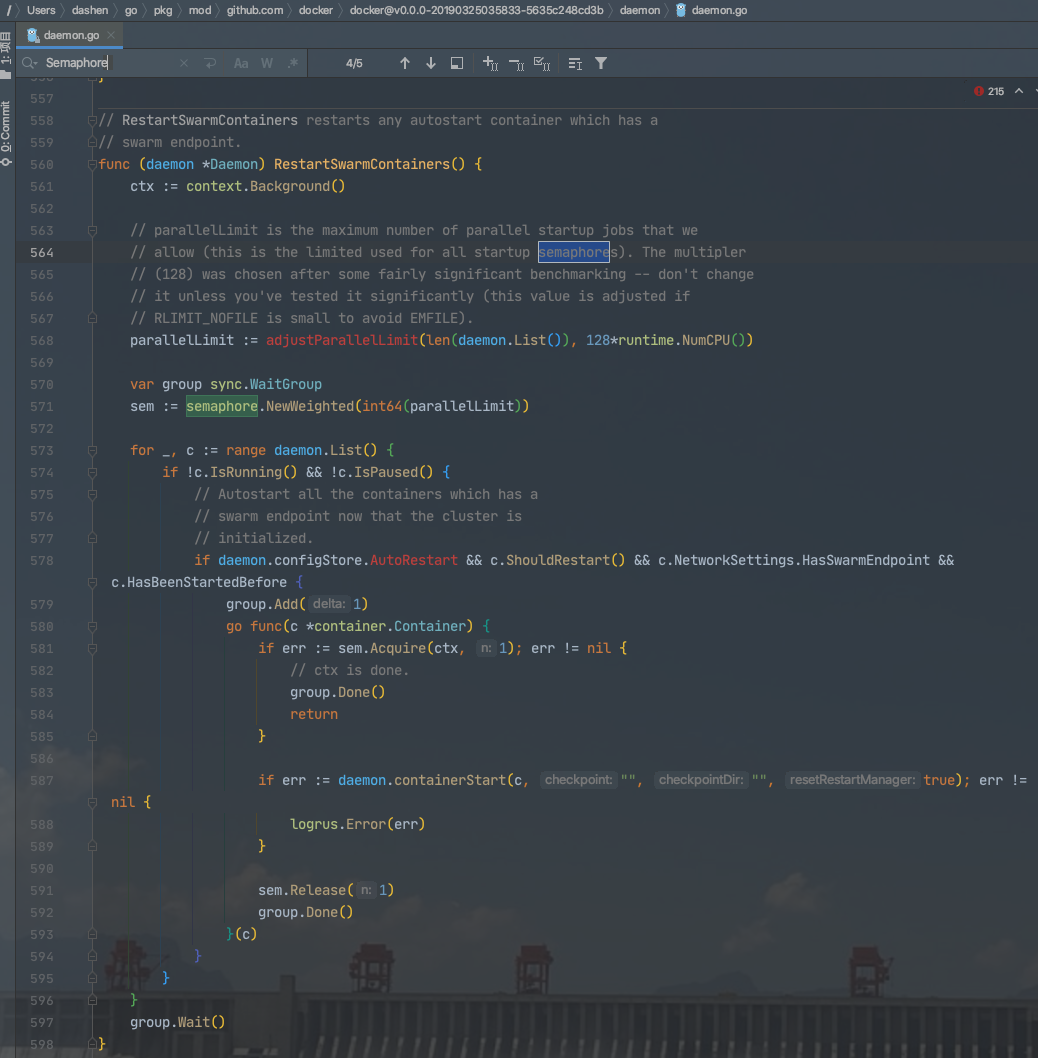
docker项目中有使用:


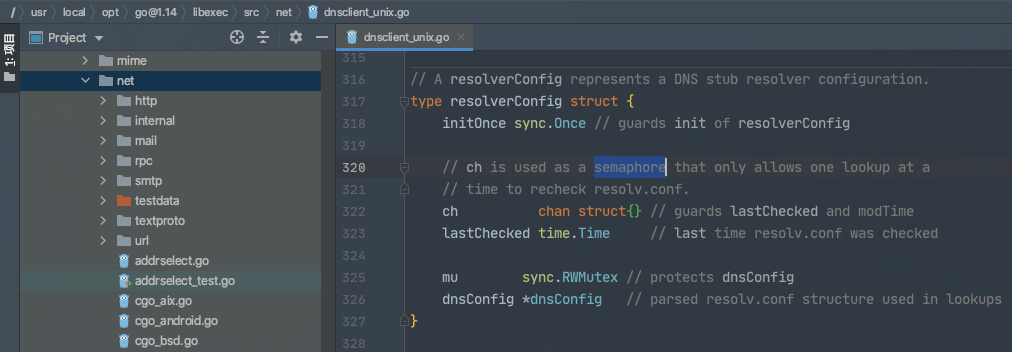
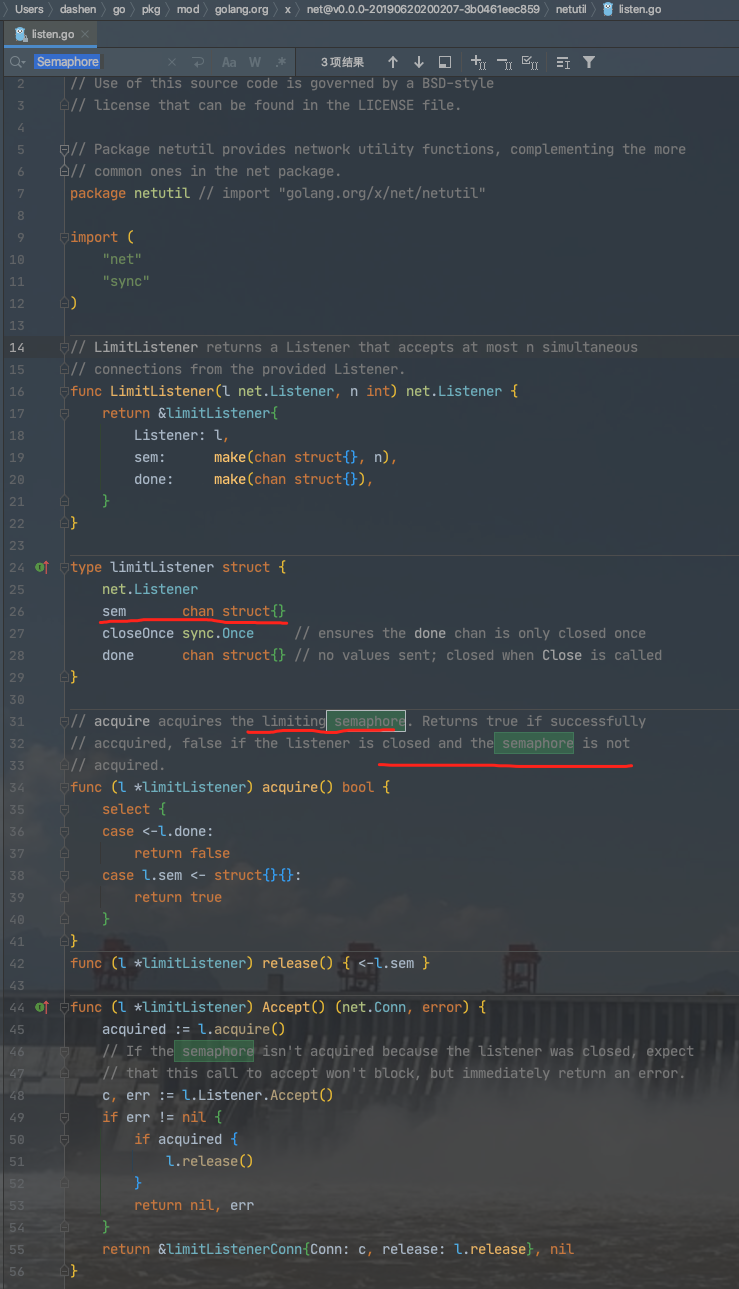
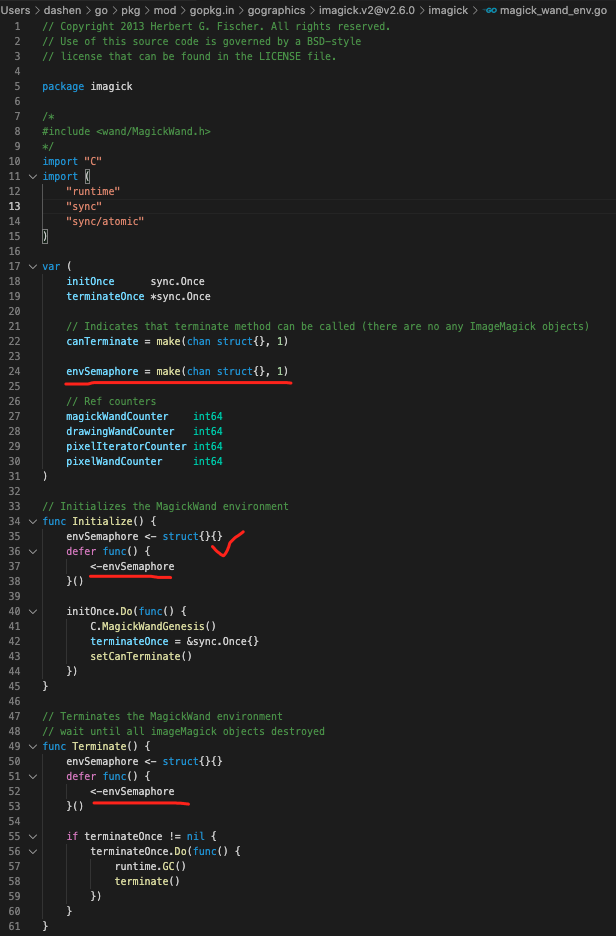
而在大多数项目中,都用channel来替代semaphore.Weight作为信号量,

如Go的官方库net:


golang.org/x/net/netutil/listen.go:


go/pkg/mod/gopkg.in/gographics/imagick.v2@v2.6.0/imagick/magick_wand_env.go:


这里有另一种实现