Asynq的使用

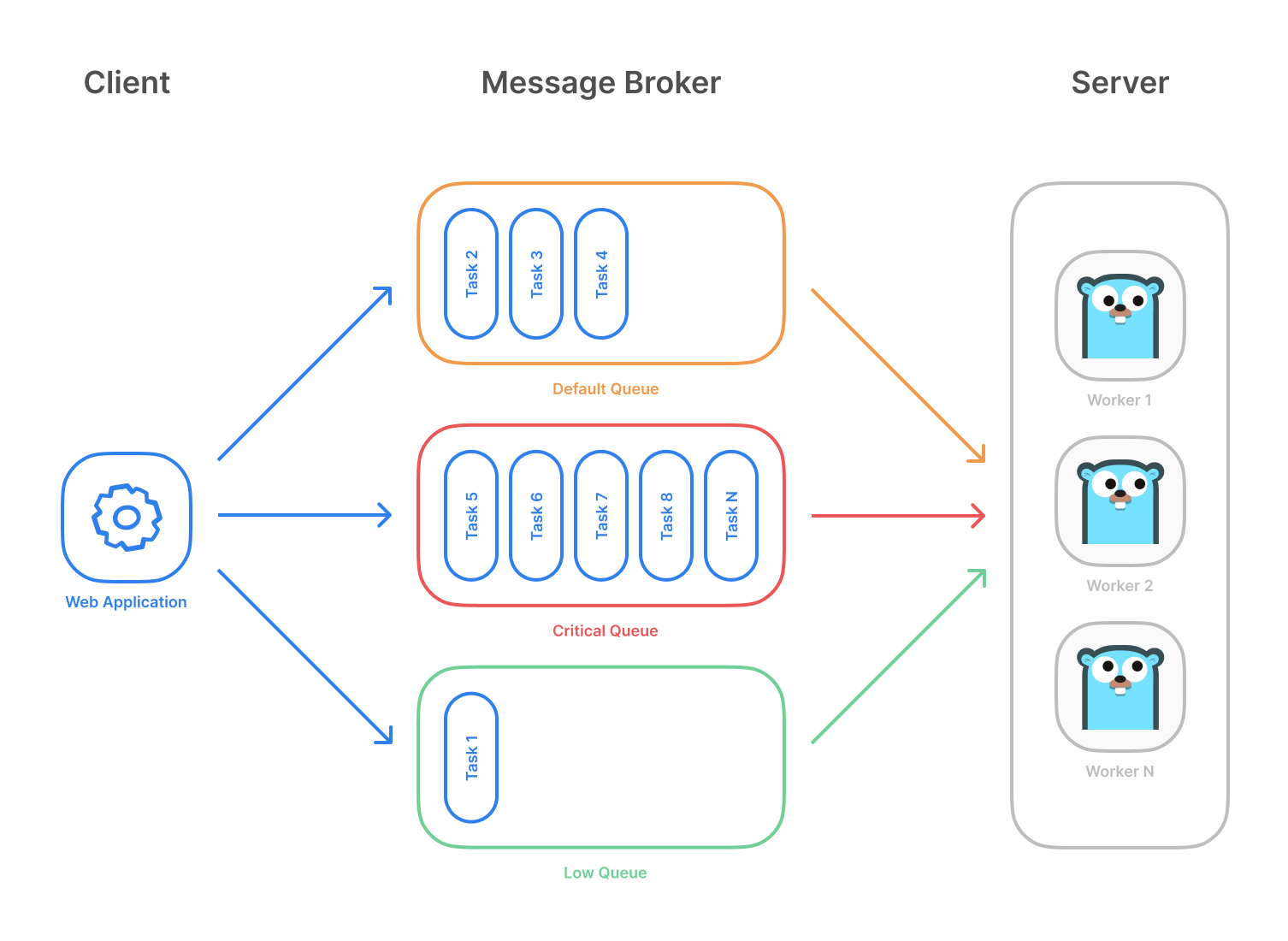
Asynq是一个Go实现的分布式任务队列和异步处理库,基于redis,类似Ruby的sidekiq和Python的celery。Go生态类似的还有machinery和goworker
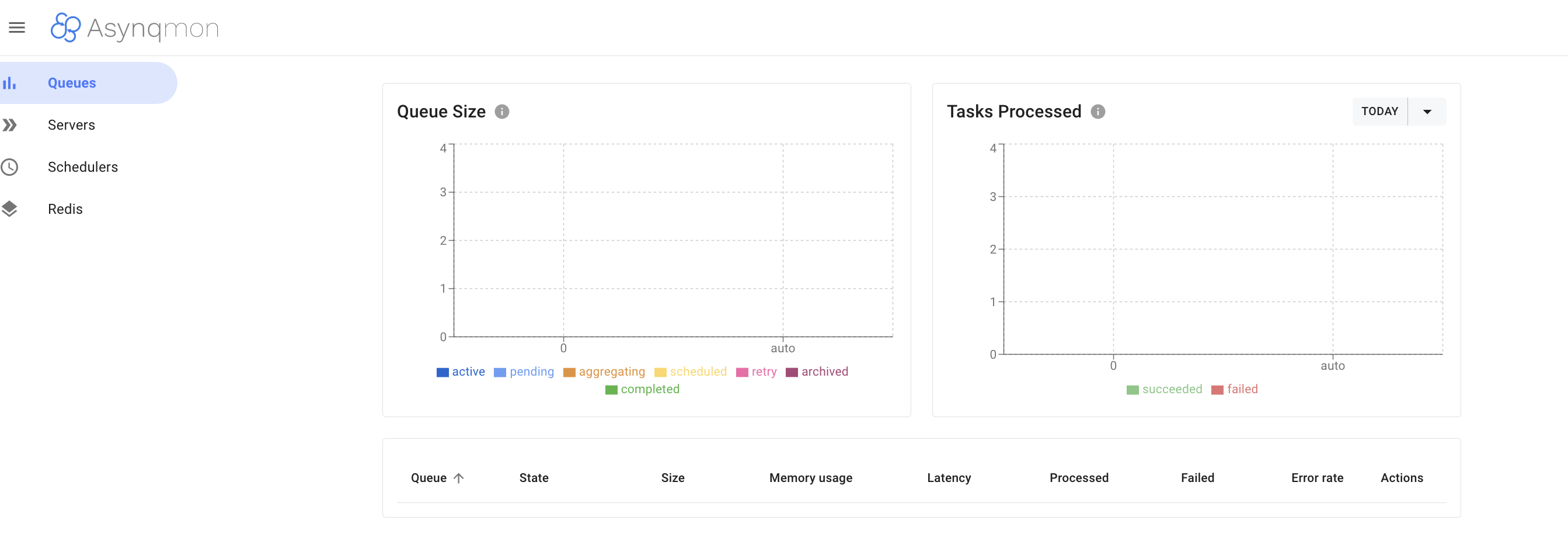
同时提供一个WebUI asynqmon,可以源码形式安装或使用Docker image, 还可以和Prometheus集成

docker run --rm --name asynqmon -p 8080:8080 hibiken/asynqmon,如果使用的是主机上的redis,还需加上 --redis-addr=host.docker.internal:6379,否则会报错

docker run --rm --name asynqmon -p 8080:8080 hibiken/asynqmon --redis-addr=host.docker.internal:6379

1
2
3
4
5
6
7
8
9
➜  asynq-demo git:(main) ✗ tree
.
├── client.go
├── const.go
├── go.mod
├── go.sum
└── server.go

0 directories, 5 files

其中const.go:

1
2
3
4
5
6
7
8
9
10
package main

const (
redisAddr = "127.0.0.1:6379"
redisPasswd = ""
)

const (
TypeExampleTask = "shuang:asynq-task:example"
)

client.go:

1
2
3
4
5
6
7
8
9
10
11
12
13
14
15
16
17
18
19
20
21
22
23
24
25
26
27
28
29
30
31
32
33
34
35
36
37
38
39
40
41
42
43
44
45
46
47
48
49
50
51
52
53
54
55
56
57
58
59
60
61
62
63
64
65
66
67
68
69
70
71
72
73
74
75
76
77
78
79

package main

import (
"encoding/json"
"fmt"
"log"
"time"

"github.com/hibiken/asynq"
)

type ExampleTaskPayload struct {
UserID string
Msg string
// 业务需要的其他字段
}

func NewExampleTask(userID string, msg string) (*asynq.Task, error) {
payload, err := json.Marshal(ExampleTaskPayload{UserID: userID, Msg: msg})
if err != nil {
return nil, err
}
return asynq.NewTask(TypeExampleTask, payload), nil
}

var client *asynq.Client

func main() {

client = asynq.NewClient(asynq.RedisClientOpt{Addr: redisAddr, Password: redisPasswd, DB: 0})
defer client.Close()

//go startExampleTask()
startExampleTask()

//startGithubUpdate() // 定时触发
}

func startExampleTask() {

fmt.Println("开始执行一次性的任务")
// 立刻执行
task1, err := NewExampleTask("10001", "mashangzhixing!")
if err != nil {
log.Fatalf("could not create task: %v", err)
}

info, err := client.Enqueue(task1)
if err != nil {
log.Fatalf("could not enqueue task: %v", err)
}
log.Printf("task1 -> enqueued task: id=%s queue=%s", info.ID, info.Queue)

// 10秒后执行(定时执行)
task2, err := NewExampleTask("10002", "10s houzhixing")
if err != nil {
log.Fatalf("could not create task: %v", err)
}

info, err = client.Enqueue(task2, asynq.ProcessIn(10*time.Second))
if err != nil {
log.Fatalf("could not enqueue task: %v", err)
}
log.Printf("task2 -> enqueued task: id=%s queue=%s", info.ID, info.Queue)

// 30s后执行(定时执行)
task3, err := NewExampleTask("10003", "30s houzhixing")
if err != nil {
log.Fatalf("could not create task: %v", err)
}

theTime := time.Now().Add(30 * time.Second)
info, err = client.Enqueue(task3, asynq.ProcessAt(theTime))
if err != nil {
log.Fatalf("could not enqueue task: %v", err)
}
log.Printf("task3 -> enqueued task: id=%s queue=%s", info.ID, info.Queue)
}

server.go:

1
2
3
4
5
6
7
8
9
10
11
12
13
14
15
16
17
18
19
20
21
22
23
24
25
26
27
28
29
30
31
32
33
34
35
36
37
38
39
40
41
42
43
44
45
46
47
48
49
50
51
52
53
54
55
56
57
58
59
60
61
62
63
64
65
66
67
68
69
package main

import (
"context"
"encoding/json"
"fmt"
"time"

"github.com/davecgh/go-spew/spew"
"github.com/hibiken/asynq"
)

var AsynqServer *asynq.Server // 异步任务server

func initTaskServer() error {
// 初始化异步任务服务端
AsynqServer = asynq.NewServer(
asynq.RedisClientOpt{
Addr: redisAddr,
Password: redisPasswd, //与client对应
DB: 0,
},
asynq.Config{
// Specify how many concurrent workers to use
Concurrency: 100,
// Optionally specify multiple queues with different priority.
Queues: map[string]int{
"critical": 6,
"default": 3,
"low": 1,
},
// See the godoc for other configuration options
},
)
return nil
}

func main() {
initTaskServer()
mux := asynq.NewServeMux()

mux.HandleFunc(TypeExampleTask, HandleExampleTask)
// ...register other handlers...

if err := AsynqServer.Run(mux); err != nil {
fmt.Printf("could not run asynq server: %v", err)
}
}

func HandleExampleTask(ctx context.Context, t *asynq.Task) error {

res := make(map[string]string)

spew.Dump("t.Payload() is:", t.Payload())
err := json.Unmarshal(t.Payload(), &res)
if err != nil {
fmt.Printf("rum session, can not parse payload: %s, err: %v", t.Payload(), err)
return nil
}
//-----------具体处理逻辑------------
spew.Println("拿到的入参为:", res, "接下来将进行具体处理")
fmt.Println()
// 模拟具体的处理
time.Sleep(5 * time.Second)
fmt.Println("--------------处理了5s,处理完成-----------------")

return nil

}

执行redis-server


清除redis中所有的key:


执行docker run --rm --name asynqmon -p 8080:8080 hibiken/asynqmon --redis-addr=host.docker.internal:6379

执行 go run client.go const.go (生产者,产生消息放入队列)

此时能看到redis中多个几个key
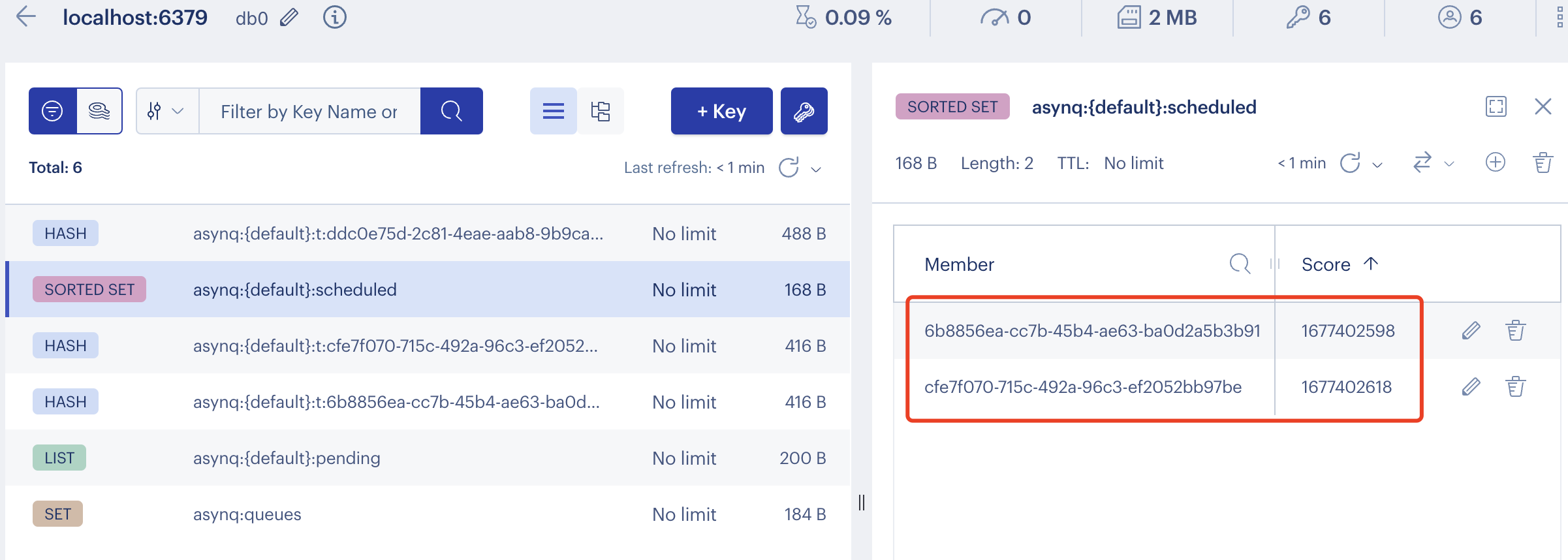
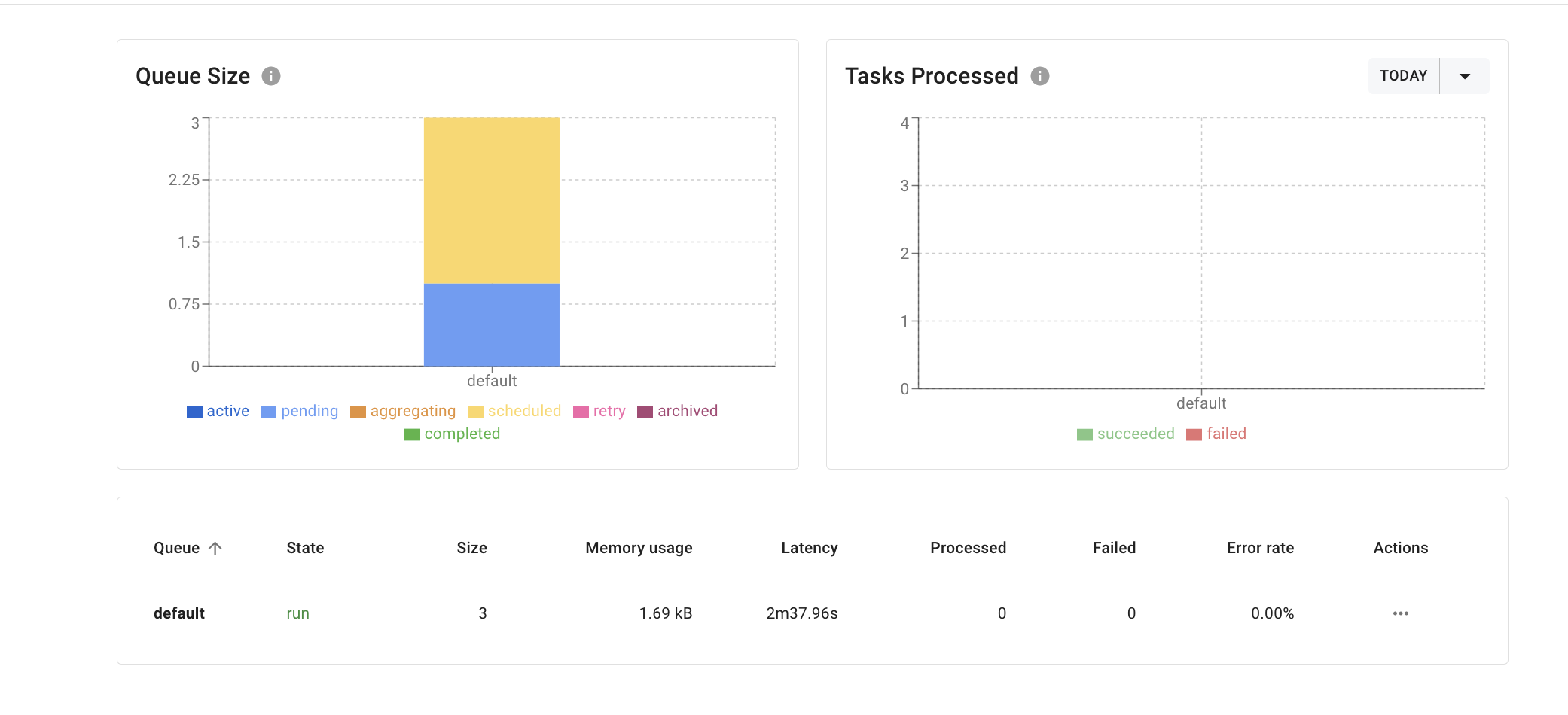
同时管理后台能看到队列的信息

执行 go run server.go const.go (消费者,消费队列中的消息)
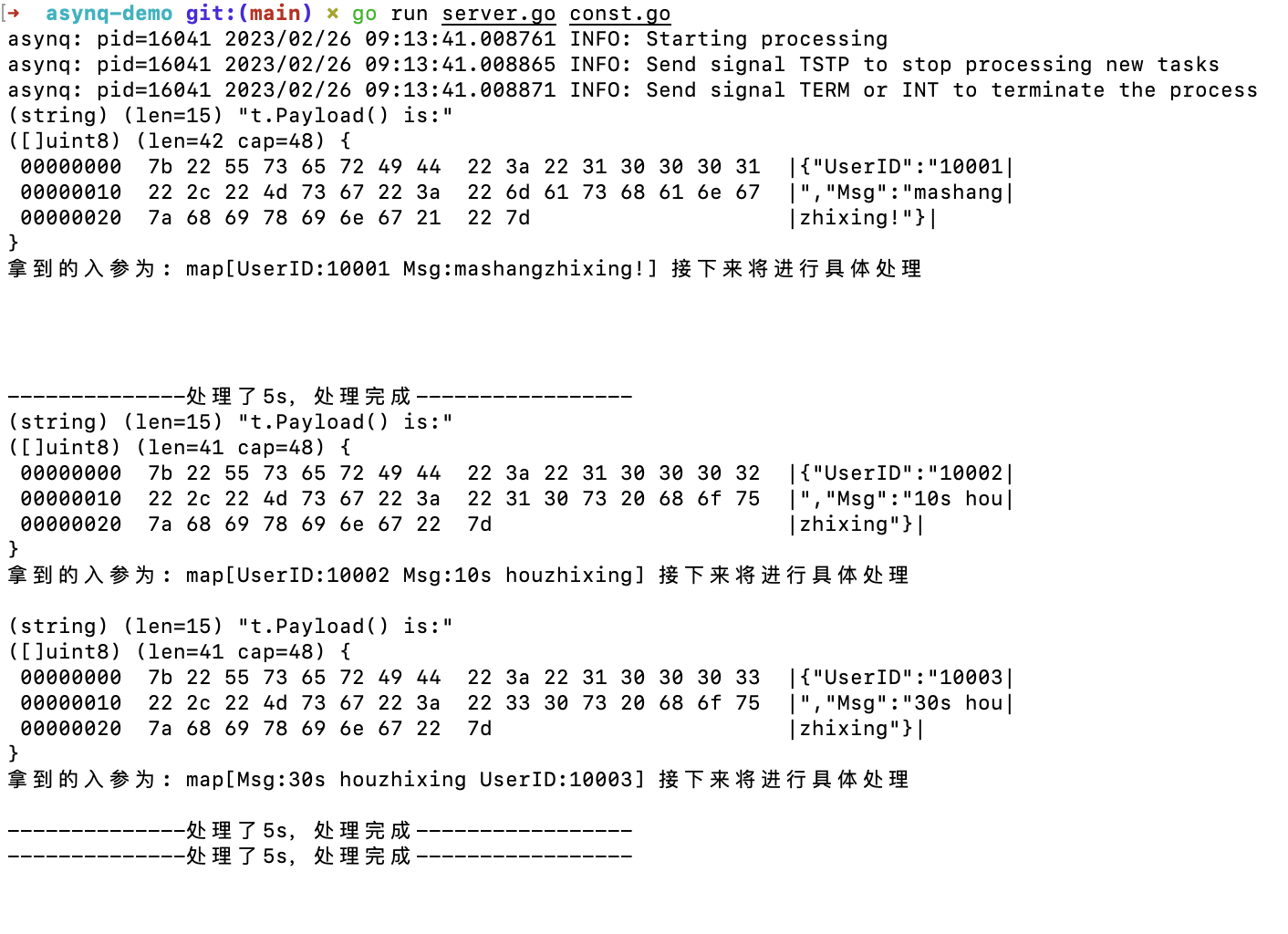
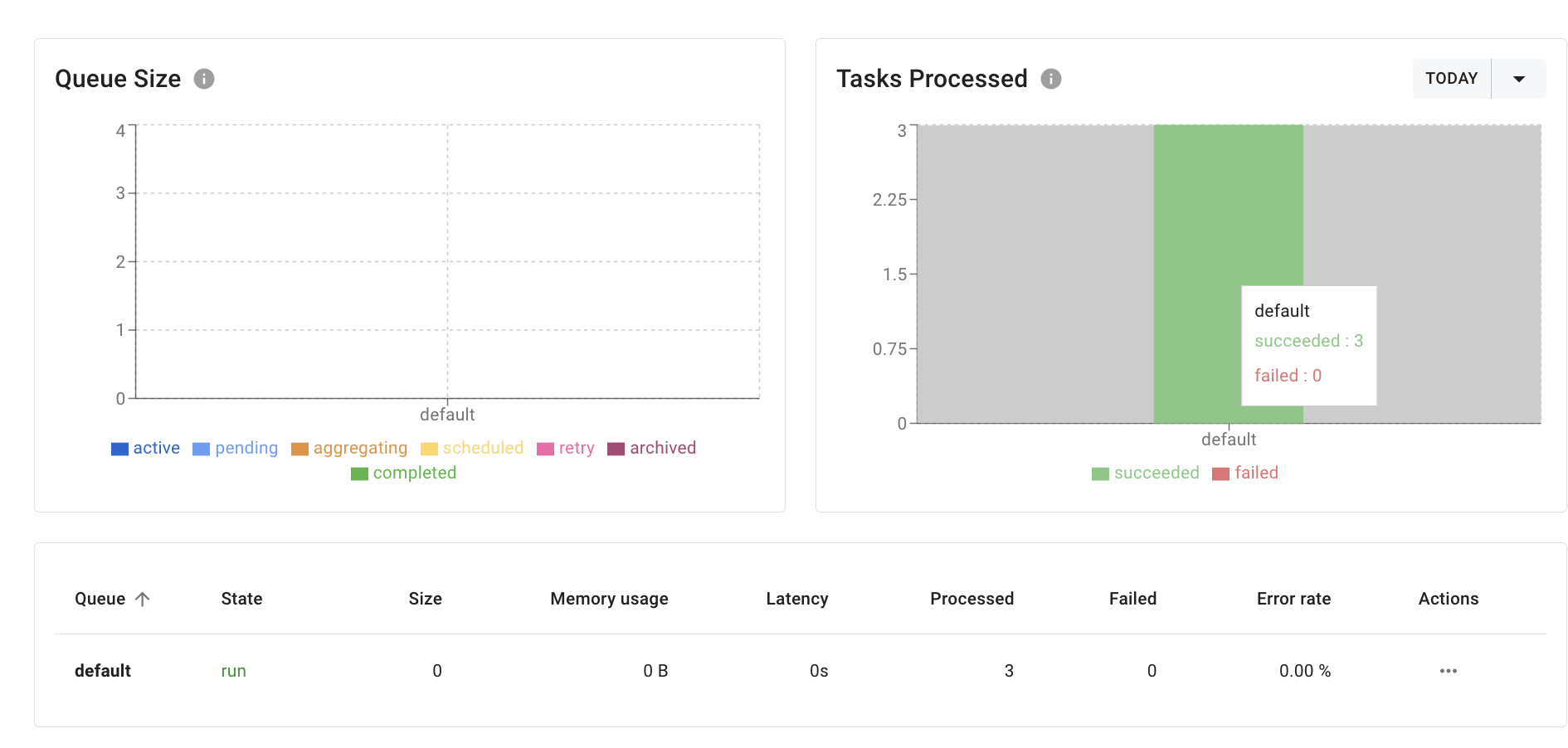
可以看到都被处理了
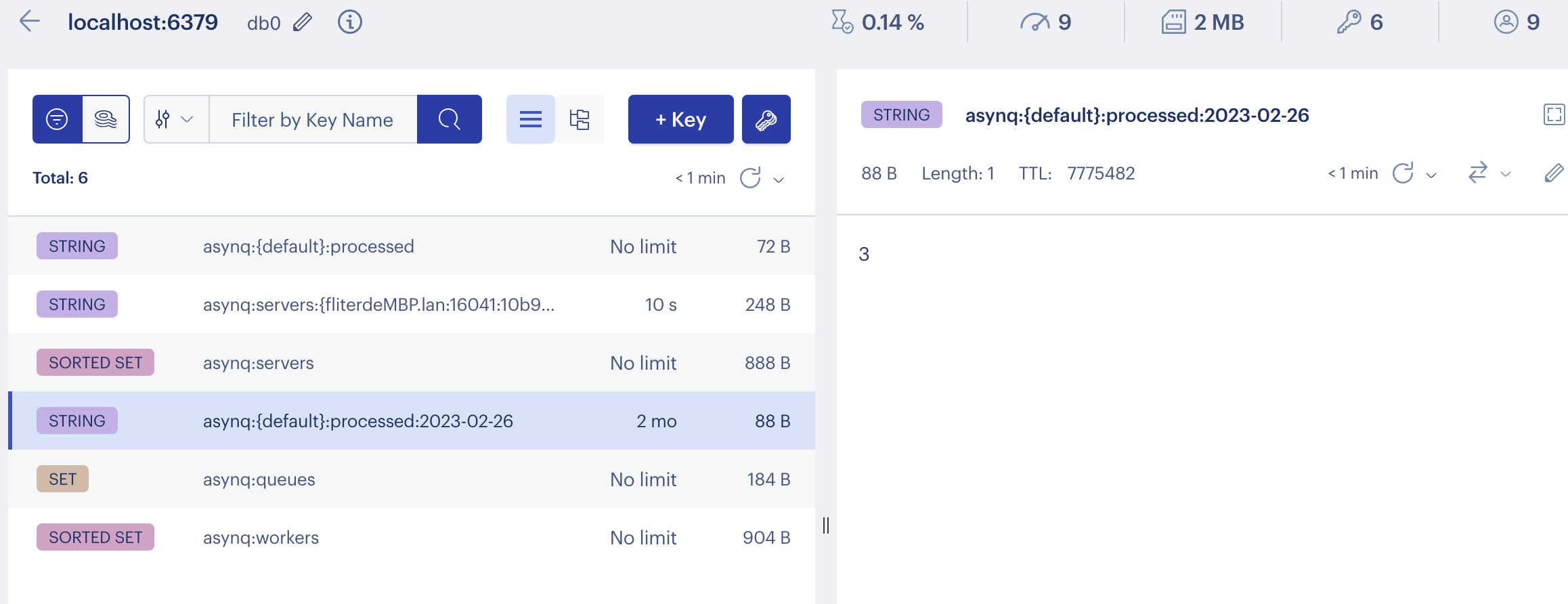
此时redis中的key:

此处的业务处理为模拟,实际可能是某个被触发后不需要马上执行的操作


实际试一下。通过一个定时器(24h执行一次),触发代码每天向github push当天的代码等内容。收到触发后无需马上执行(可能当时其他请求量高,机器资源紧张),可以先放入队列,延迟30min后实际去执行。

完整Demo push github的功能没有完全实现


另外可以配置队列的优先级,asynq队列如何配置队列优先级

1
2
3
4
5
6
7
8
9
10
11
12
13
14
15
16
17
18
19
// 初始化异步任务服务端
AsynqServer = asynq.NewServer(
asynq.RedisClientOpt{
Addr: redisAddr,
Password: redisPasswd, //与client对应
DB: 0,
},
asynq.Config{
// Specify how many concurrent workers to use
Concurrency: 100,
// Optionally specify multiple queues with different priority.
Queues: map[string]int{
"critical": 6,//关键队列中的任务将被处理 60% 的时间
"default": 3,//默认队列中的任务将被处理 30% 的时间
"low": 1,//低队列中的任务将被处理 10% 的时间
},
// See the godoc for other configuration options
},
)

go asynq 异步任务 (延迟触发) 简单案例及奇怪的错误

文章目录